
Pest guide
Wasps, hornets and yellowjackets
A nest under the eaves, wasps flying in and out of the ground, or yellowjackets around the trash? Here's how to stay safe and what to check.
What you're probably wondering
Need a pro? Call (855) 424-9709 to reach an independent local pest control company.
Start here
Check these first
What a pest pro would look at first. Most of it takes a flashlight and a few minutes.
- 1
Find the nest from a distance: under eaves, in a shed, in a bush, or a hole in the ground with insects flying in and out.
- 2
Note the size: golf ball, softball or bigger. Bigger nests mean more insects.
- 3
Watch the traffic. A steady stream in and out means an active nest.
- 4
Check how close it is to doors, play areas, decks and walkways.
- 5
Check for wasps indoors, which can mean a nest in a wall or attic.
- 6
Ask the household if anyone has had a serious reaction to a sting before.
Your situation
Common situations with wasps, hornets and yellowjackets
Read the signs
If you see this, it usually means…
Identify
How to tell what you have
Wasps and yellowjackets
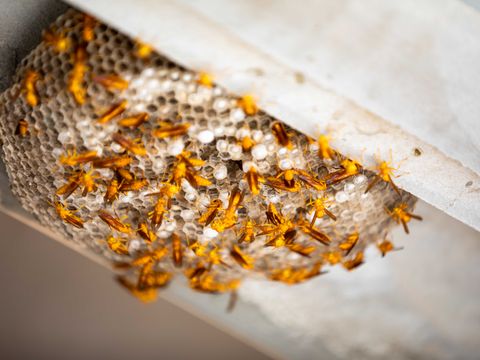
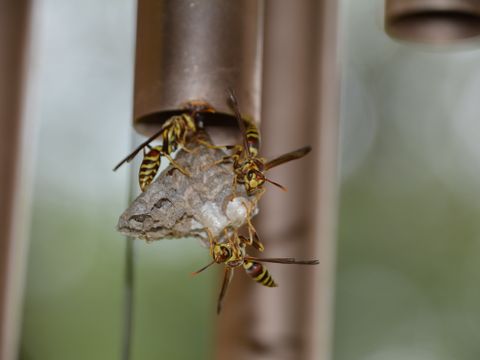
Smooth, shiny bodies with a thin waist; bright yellow-and-black or brown markings.
Can sting several times. Yellowjackets are drawn to food and trash.
Honey bees
Fuzzy, golden-brown, rounder bodies.
Important pollinators. A beekeeper can often collect a swarm instead of destroying it.
Quick facts
Practical steps
What to do now
What you can do today
- Keep kids and pets away from the nest area.
- Use a different door if the nest is near an entrance.
- Cover drinks outdoors and keep trash cans closed.
- Note when the insects are least active (evening, cool weather).
- If someone has a known sting allergy, make sure their emergency medication is on hand.
What to avoid
- Don't knock down, spray, burn or flood a nest yourself, especially large ones or ground nests.
- Don't swat at wasps near the nest. CDC/NIOSH advises staying calm and moving away slowly.
- Don't plug a hole in the wall where wasps are going in.
- Don't run a mower over a ground nest.
Health and safety
- Stings are painful, and some people have serious allergic reactions. CDC/NIOSH: call 911 for trouble breathing, swelling of the face or throat, or dizziness after a sting.
- If attacked by several insects, run away and get indoors or into shade. Bees release a chemical when they sting that can attract others.
- For a sting without a reaction: wash the area, use a cold pack, and don't scratch.
Based on public guidance from the U.S. EPA and CDC. See the sources below. In an emergency, call 911.
Getting help
When it's time for a pro
When to call a pro
Call a pro for any nest near doors or play areas, ground nests, large or high nests, nests in walls, or if anyone in the household is allergic.
What a pro visit usually looks like
- 1
Identification
Confirming the insect and finding the nest, including ones hidden in walls.
- 2
Safe removal
Treating and removing the nest with protective gear, often in the evening when insects are inside.
- 3
Wall voids
Treating nests in walls or attics without driving insects indoors.
- 4
Prevention tips
Pointing out spots likely to attract new nests.
Pros usually treat or remove the nest with protective gear, often in early morning or evening. Ask the company you speak with how they plan to handle your situation and how to prepare.
Prevention
Keep wasps, hornets and yellowjackets from coming back
- Check eaves, sheds, decks and play sets in spring, when nests are small.
- Seal gaps in siding, soffits and vents (when no insects are using them).
- Keep trash cans and recycling closed, and rinse sweet containers.
- Pick up fallen fruit in the yard.
- Cover food and drinks outdoors.
- Fill old holes in the yard that ground nesters could use.

Match what you see
Signs of wasps, hornets and yellowjackets
Learn more
Want the full picture?

Sources
- Insects and Scorpions at Work CDC / NIOSH
- Do's and Don'ts of Pest Control U.S. EPA
- Citizen's Guide to Pest Control and Pesticide Safety U.S. EPA
Our pages are our own plain-language summaries of public U.S. government guidance, with links to the originals.
FAQ
Questions about wasps, hornets and yellowjackets
Will a wasp nest go away on its own?
Most wasp and yellowjacket nests die off in late fall and aren't reused. But until then, an active nest near the house is a sting risk.
Is it safe to remove a small nest myself?
Small, early-season nests in open spots carry less risk, but any nest near people, in the ground or in a wall is safer left to a pro.
Why are yellowjackets so aggressive in late summer?
Colonies are at their largest and food is scarcer, so they forage hard around trash, food and drinks.
What if they're honey bees?
Honey bees are valuable pollinators. A local beekeeper or bee removal service can often relocate them.
What's the difference between wasps, hornets and yellowjackets?
They're related. Yellowjackets are often ground or wall nesters; hornets build large paper nests; paper wasps build open, umbrella-shaped nests.
When are wasps most active?
Late summer and fall, when colonies are biggest.
Do wasps come back to the same nest?
Old nests usually aren't reused, but new queens may build nearby.
Is it safe to knock down a nest at night?
Even at night, a disturbed nest can sting. Large or hidden nests are a job for a pro.
How do I prevent wasp nests?
Seal gaps in eaves and siding, cover trash and food outdoors, and check for small nests in spring.
What if a nest is inside a wall?
Don't seal the hole; wasps may chew inward. Call a pro.
Are ground nests dangerous?
Yes. Mowing over a yellowjacket ground nest can trigger many stings.
When should I get medical help for a sting?
Call 911 for trouble breathing, swelling of the face or throat, or dizziness.
Pests
Other common pests
Mice and rats
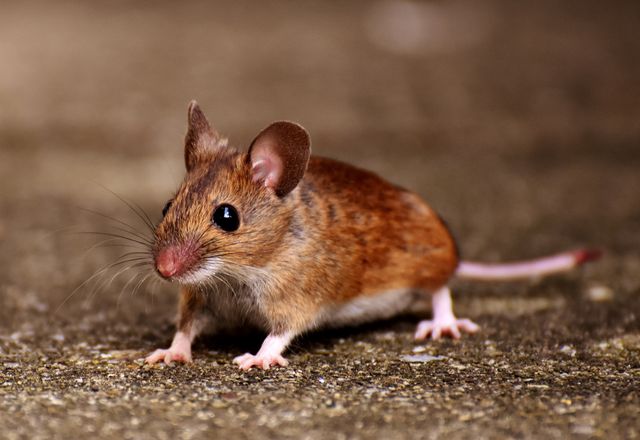
Mice and rats move indoors for food, water and warmth, mostly in fall and winter.
Signs and what to do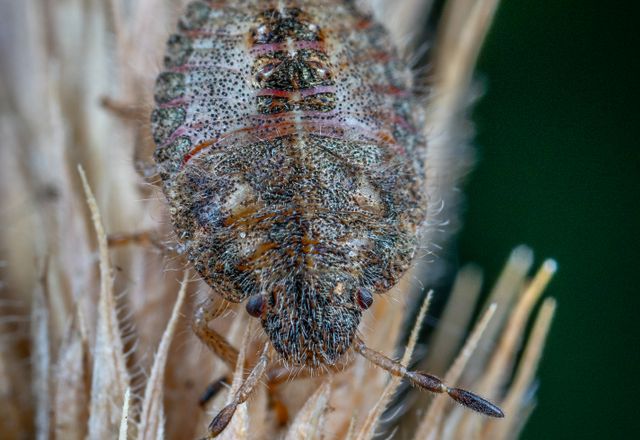
Bed bugs
Bed bugs ride in on luggage, used furniture and clothing, and hide within a few feet of where people sleep.
Signs and what to do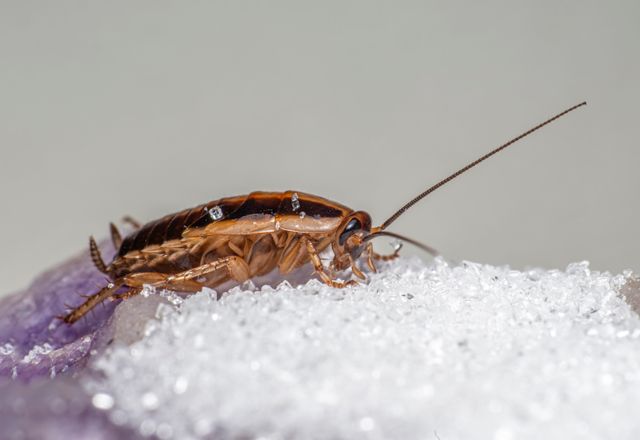
Cockroaches
German cockroaches live indoors near food and water; larger American roaches come in from drains and outside.
Signs and what to doOur partner
Rather book online?
Compare local pest control pros, see their reviews and past jobs, and book through Thumbtack.
